Build the Agricultural Career India's Food Economy Needs.
Raisoni's Agriculture programmes span B.Sc.(Hons.) Agriculture, Horticulture, Sericulture, Forestry and B.Tech Agriculture — backed by field-based labs, farm training, and a placement team connected to agri-business, agritech and government sectors. Get direct admission guidance today.
A+
NAAC Accredited
118+
Patents Granted
1000+
Recruiting Companies
100000+
Alumni

Build the Agricultural Career India's Food Economy Needs.
Raisoni's Agriculture programmes span B.Sc.(Hons.) Agriculture, Horticulture, Sericulture, Forestry and B.Tech Agriculture — backed by field-based labs, farm training, and a placement team connected to agri-business, agritech and government sectors. Get direct admission guidance today.

A+
NAAC Accredited
118+
Patents Granted
1000+
Recruiting Companies
100000+
Alumni
A modern agriculture education should prepare students for careers, research, innovation, and rural development leadership — not just classroom learning.
At Raisoni, Agriculture programmes combine strong scientific foundations with hands-on field exposure, farm management training, and skill development.
Students learn from experienced faculty using modern laboratories, experimental farms, project-based learning, internships, industrial and farm visits, workshops, seminars, and research activities. Every programme is designed to help students develop analytical thinking, technical expertise, and problem-solving skills required across today's agri-industries.
Whether you are interested in Agriculture, Horticulture, Sericulture, Forestry, or B.Tech Agriculture, Raisoni provides the right academic environment to build a successful career in the agricultural sciences.
Students also receive dedicated placement training, aptitude development, communication skills, internship opportunities, and career guidance throughout their academic journey.
For Agriculture Admission 2026, students receive complete counselling support regarding programme selection, eligibility, entrance exams, scholarships, documentation, and admissions.
Agriculture Specializations
Curriculum highlights, career paths and hiring industries for every specialization.
Why Students Choose Raisoni
NAAC Accreditation
Institutionally reviewed for teaching, infrastructure and governance quality.
Experienced Faculty
Mix of academic researchers and industry-experienced instructors.
Modern Labs & Farms
Experimental farms and labs kept current with field-ready practices.
Placement Record
Structured placement drives with recurring recruiter partnerships.
Startup Support
Incubation and mentorship for students building agri-ventures.
Scholarships
Merit and need-based scholarship options reviewed during counselling.
Hostel Facilities
On-campus housing for outstation students, separate for men and women.
Alumni Network
Active alumni across agri-businesses and government roles, engaged in mentoring current students.
Industry Collaboration
MOUs and joint projects with companies across agri-input and food-processing sectors.
Our Campus Events
Annual Events
Participants
Expert Talks

Freshers Day

Antaragni

Graduation Day
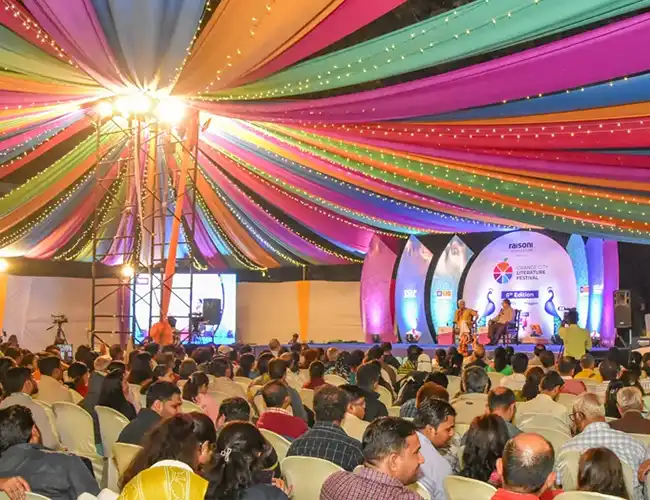
OCLF
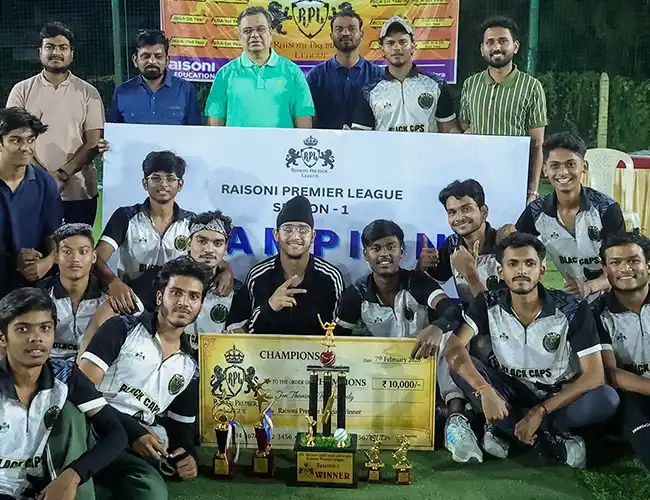
Raisoni Premier League

Chhatrapati Shivaji Maharaj Jayanti

Ganesh Utsav
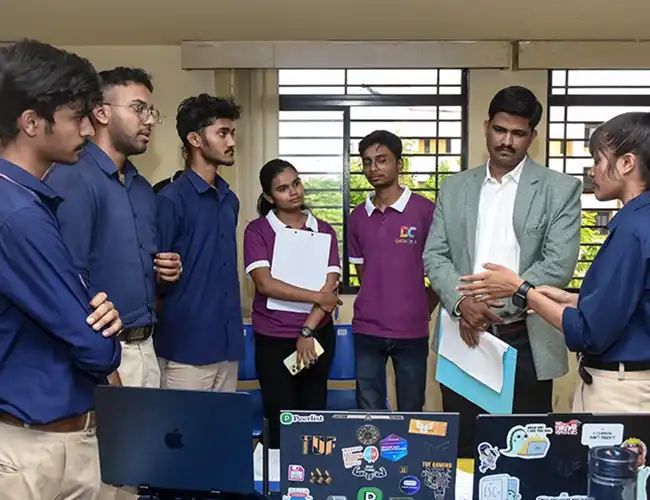
Hackthon
Six Simple Steps to Your Seat
Enquiry
Submit your details online or call the admissions desk.
Counselling
A counsellor walks you through programs and eligibility routes.
Eligibility Check
Your CET/JEE score or entry route is verified against seat matrix.
Document Verification
Academic and identity documents are checked in person or online.
Fee Payment
Complete admission fee payment through available modes.
Confirmation
Receive seat confirmation and orientation schedule.
Eligibility
Academic Eligibility
Candidates should clear class 12th in Science stream with at least 50% for Open & 45% for reserved category aggregate marks. An equivalent Examination, with PCB or PCMB or PCM or Inter (Agriculture) and passed with English. Good score conforms the admission in top agriculture colleges.
Deficiency Courses & Entrance Exam
Those who have not offered Biology or Mathematics shall have to complete deficiency courses as prescribed by respective University. RUCET is mandatory entrance examination for admission to Raisoni Universities (unless the candidate has a valid positive score in MHT-CET, JEE Main, or SAT.)
RTMNU Affiliated Colleges
Admission to colleges under Rashtrasant Tukadoji Maharaj Nagpur University (RTMNU) requires a valid qualifying score in the applicable entrance examination such as MHT-CET, JEE Main, MAH MBA CET, or MH CET Law, as prescribed for the respective course.
Documents Required
- Class 10 & 12 Marksheets
- ICAR AIEEA / CET Scorecard (if applicable)
- Transfer & Migration Certificate
- Domicile Certificate
- Category / Caste Certificate (if applicable)
- Passport-size Photographs
- Aadhaar Card
Career Opportunities
Agriculture Officer
Government and cooperative-sector crop advisory and extension roles.
Agronomist
Crop planning and yield-improvement roles across agri-input companies.
Horticulture Officer
Fruit, vegetable and floriculture management roles.
Agricultural Engineer
Farm machinery, irrigation and food-processing engineering roles.
Forest/Conservation Officer
Forest department and environmental agency roles.
Government Jobs
ICAR, state agriculture departments and allied PSU opportunities.
Higher Studies
M.Sc. Agriculture, M.Tech, or research pathways after graduation.
Entrepreneurship
Campus incubation support for agri-startups and farm-based ventures.
Recruiters




























and Many More…
Placement Preparation
1. Aptitude
Quant, logical & verbal training from year two onward.
2. Field Skill Practice
Hands-on training aligned to farm and lab-based roles.
3. Soft Skills
Communication and group discussion training.
4. Mock Interviews
Programme-specific mock rounds with feedback.
5. Resume Building
Individual resume review before drive season.
6. Internships
Farm and industry internships built into the academic calendar.
7. Placement Drives
On-campus drives with recurring recruiter partners.
Why study Agriculture in Raisoni
Raisoni's location amid Central India's agricultural belt gives students direct, everyday access to working farmland, making it a natural setting for hands-on agricultural education rather than a purely classroom-based one.
That proximity translates directly into practical training opportunities — experimental farms, nearby cropping systems, and rural agri-networks give students real field exposure that's harder to get in a purely urban campus setting.
For students choosing an agriculture programme in Saikheda specifically, that means more hours on working land, closer faculty-to-farm supervision, and a lower cost of living compared to studying the same discipline in a metro city.
Frequently Asked Questions
Applications are accepted on a rolling basis until seats are filled under each quota. Students are advised to apply early, as some programmes close sooner than others.
Yes, where management or institute-level quota seats are available, direct admission is offered based on Class 12 aggregate, subject to state regulatory norms.
Not necessarily — students without Biology or Mathematics in Class 12 can apply but will need to complete prescribed deficiency courses.
Seat count varies by specialization and is governed by the university-approved intake for that academic year.
Fees vary by specialization and admission category; the admissions team shares a full fee breakdown during counselling.
Yes, merit-based and need-based scholarship options are available and reviewed case by case.
Yes, installment options are available for eligible students, subject to the fee policy in place.
At least one qualifying route — ICAR AIEEA, state CET, or an eligible direct entry path — is required, depending on the quota applied under.
A minimum of 50% aggregate is required for open category (45% for reserved category) in the relevant science stream.
Domicile requirements apply mainly to state-quota seats and vary by admission route.
Yes, separate hostel facilities are available for men and women, subject to availability at the time of admission.
Yes, transport facilities are available on select routes, with details shared closer to the semester start.
Recruiters span agri-input companies, food processing, government departments and agritech firms; a current list is shared during placement briefings.
Yes, farm and industry internships are built into the academic calendar as part of practical training.
Applications for Agriculture Admission 2026 are open. Talk to a counsellor today.